Unlock this content

To unlock this content please submit the form.

Yes, I want to unlock this content

RIA mobile banking app

A fast-growing US Registered Investment Advisor managing hundreds of millions in client assets needed to replace fragmented back-office systems, manual onboarding, and disconnected client experiences with a unified, AI-powered wealth management platform – built on banking-grade security from the ground up. The app is now live in the App Store.

Architecting a Secure Wealth Management Platform for a US-Based RIA

Backend. Security. Architecture. Live in the App Store.

Benchmarked designed and built the backend infrastructure, security architecture, authentication systems, and architectural framework for a modular wealth management platform – integrating custodians, automating compliance workflows, securing financial data, and delivering a mobile app with banking-grade security to the App Store.

mobile app

Live in App Store Banking-Grade Mobile Security Benchmarked implemented Auth0 authentication, two-factor authentication, biometric login, session management, and encrypted data handling - meeting the security bar required for App Store approval and financial services regulation.

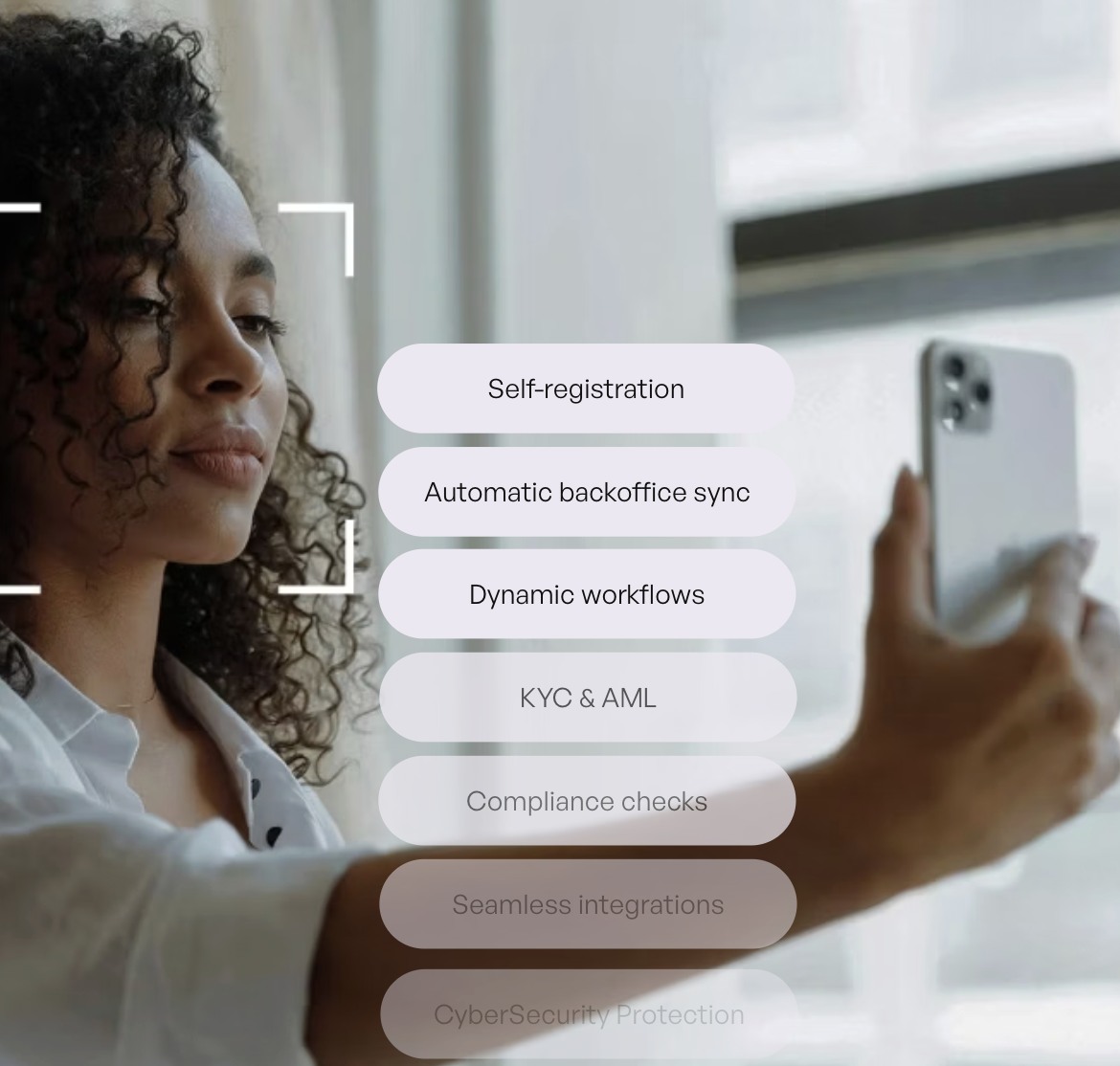
80% of Wealth Managers Still Use Manual Onboarding The platform replaces paper-based, print-sign-scan client onboarding with fully digital, dynamic workflows that adjust by product, custodian, and account type - with built-in KYC, AML, and compliance validation.

$5.9M Average Cost of a Financial Services Data Breach Every architectural decision - from PII isolation to custodian API security to AI container deployment - was made with this number in mind. Security isn't a feature. It's the foundation.

Why Digital experience of Wealth Management Is Broken - and Why the Fix Requires Engineering, Not Just Software

The wealth management industry runs on a patchwork of disconnected systems: one platform for custodian data, another for CRM, another for compliance, another for client communication, and paper-based processes holding it all together. Advisors spend more than half their time on admin tasks instead of advising clients.

This isn't a technology gap. It's an architecture problem.

The Real Risk

Regulated Financial Data Demands Banking-Grade Architecture

Building a wealth management platform isn't like building a SaaS app. The data is among the most sensitive and regulated in any industry:

  • Client financial profiles - income, net worth, investment holdings, account balances, Social Security numbers, tax information, and beneficiary details
  • Custodian API integrations - real-time connections to Schwab, Axos, Fidelity, and 401k plan administrators, each with their own security requirements, data formats, and compliance obligations
  • Plaid financial data access - real-time bank account connections providing transaction history, balances, and account verification
  • AI processing financial context - an AI copilot trained on client data and internal knowledge bases, handling service requests, answering portfolio questions, and generating financial calculations
  • Regulatory exposure - SEC, FINRA, GLBA, SOC 2, and state-level financial privacy regulations apply. A data breach in financial services costs an average of $5.9M per incident.

Every architectural decision - database design, API security, authentication, session management, encryption, AI deployment model - had to be made with this regulatory and security context as the primary constraint.

The Problem

Five Compounding Failures Across the Industry

The client - a US-based RIA - faced the same five problems that plague the entire wealth management sector:

1. Complex, slow client onboarding. New clients navigated a manual, paper-heavy process: print forms, wet signatures, scan documents, email back and forth, wait for custodian processing. Each onboarding took days or weeks. Every touchpoint was a dropout risk and a compliance liability.

2. Fragmented back-office systems. Custodian data from Schwab and Axos lived in one system. CRM data in Salesforce. Portfolio analytics in Envestnet Tamarac. Client documents scattered across email, shared drives, and filing cabinets. No single source of truth. No automated data flow between systems.

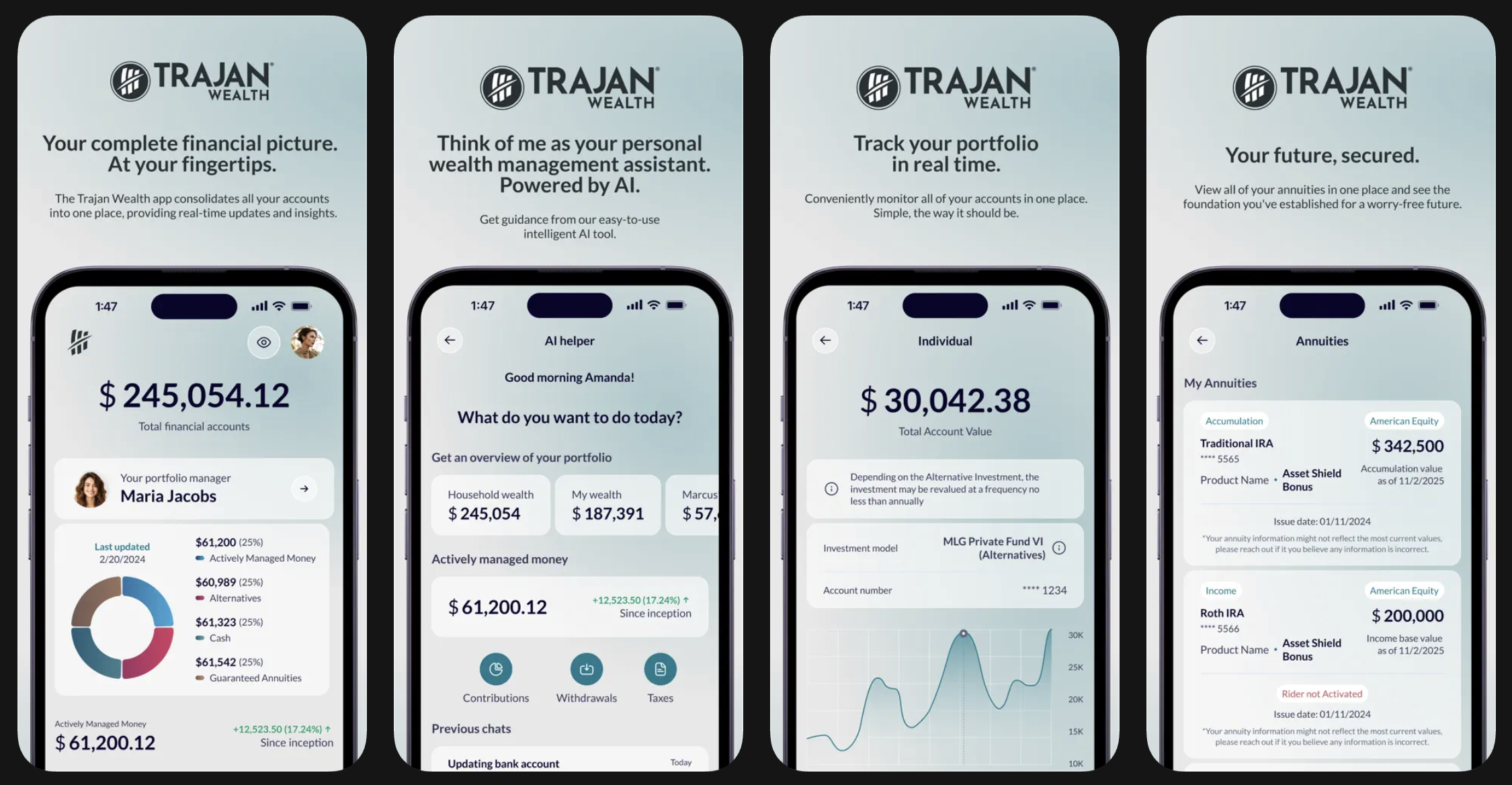
3. No unified client experience. Clients had no mobile app, no real-time portfolio view, no digital way to make contributions, request withdrawals, update beneficiaries, or communicate with their advisor. Every interaction required a phone call or email.

4. Inconsistent data capture across products. Different account types (401k, IRA, brokerage, trust) required different data — but the firm had no dynamic workflow engine to adjust capture requirements by product, custodian, or client type. The result: incomplete applications, compliance rejections, and back-and-forth that eroded client trust.

5. Limited automation, high manual load on advisors. Without workflow automation, advisors and back-office staff manually processed service requests, compliance checks, document routing, and custodian submissions. An industry study found 54% of advisors say admin tasks consume too much of their time - time that should be spent with clients.

The firm needed a platform that solved all five problems simultaneously - not five separate tools bolted together.


3: Smart Onboarding Engine

  • Architected the backend for fully digital client onboarding - replacing the paper-based, print-sign-scan workflow with a dynamic, mobile-first process
  • Built dynamic workflow logic that adjusts onboarding requirements based on product type (401k, IRA, brokerage, trust), custodian (Schwab, Axos), and account characteristics - ensuring the right data is captured the first time, with no back-and-forth
  • Integrated guided KYC (Know Your Customer) and AML (Anti-Money Laundering) workflows - risk profiling, beneficiary setup, document uploads, and identity verification all handled within the platform with automatic validation
  • Built real-time compliance checks - the backend validates every submission against custodian requirements and regulatory rules before it's processed, catching errors before they reach the custodian and trigger rejections
  • Designed the real-time progress tracker - both clients and advisors see exactly where each onboarding stands, what's complete, and what's needed

4: Custodian & CRM Integration Layer

  • Mulesoft was put in place as connector to Charles Schwab, Axos, Fidelity, and 401k plan administrators - enabling bidirectional data flow between the platform and custodians
  • Implemented one-click service requests: bank changes, beneficiary updates, contributions, withdrawals - all submitted through the platform and routed to the correct custodian automatically
  • Integrated with Salesforce - synchronizing client data, communication history, and activity logs across the platform and the firm's existing CRM
  • Built the integration layer as a modular connector pattern . new custodians, CRMs, or data sources can be added without modifying the core platform

The Solution

A Modular, Secure Platform Built Like Legos

Benchmarked designed the backend, security architecture, and system integration layer for the platform - working alongside a frontend development team to deliver a unified, modular system that connects custodians, automates compliance, secures financial data, and powers a mobile app now live in the App Store.

The architecture follows a "core + configurable" philosophy: a unified middle layer normalizes data and logic across all connected systems, while modular components - back-office modules, AI brain, connectors - can be added, configured, or swapped without rebuilding the platform.

Backend Architecture & API Design

  • Designed and built the backend infrastructure powering the entire platform - handling authentication, data normalization, workflow orchestration, custodian communication, and AI integration
  • Built the unified middle layer that normalizes data across custodians (Schwab, Axos, Fidelity) and CRMs (Salesforce, Redtail) - giving every platform component a consistent data model regardless of the source system
  • Implemented GraphQL-powered APIs enabling the frontend to query exactly the data it needs - reducing payload sizes, eliminating over-fetching, and enabling the React component architecture to be lightweight and embeddable
  • Designed for multi-tenancy - the same platform can be deployed across multiple RIA firms, each with their own custodian configurations, compliance rules, and client workflows

Banking-Grade Mobile Security

  • Implemented Auth0 as the identity and authentication layer - providing enterprise-grade identity management, single sign-on capability, and extensible security policies
  • Built two-factor authentication (2FA) across all access points - ensuring that a compromised password alone cannot grant access to client financial data
  • Implemented biometric authentication for the mobile app - fingerprint and face recognition for seamless yet secure access
  • Designed session management with automatic timeout, re-authentication triggers, and device binding - preventing session hijacking and unauthorized access from unrecognized devices
  • Built encrypted data handling throughout the mobile app - financial data is encrypted at rest on-device, encrypted in transit via TLS, and never cached in plaintext
  • Guided architectural decisions required for App Store approval - meeting Apple's security, privacy, and data handling requirements for financial applications

AI Intelligence Layer - Security Architecture

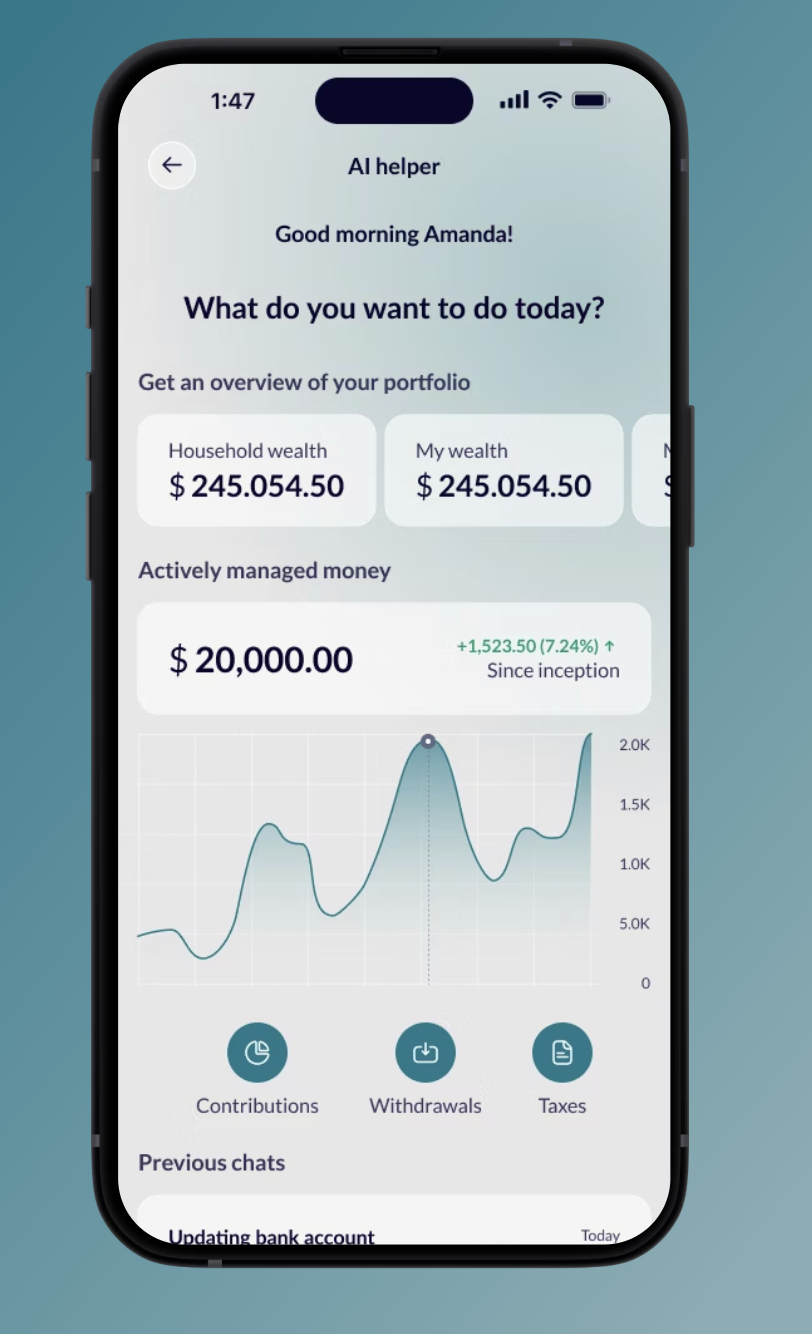
  • Designed the security architecture for the platform's AI copilot - a financial advisor AI that handles client questions, service requests, portfolio analysis, and financial calculations
  • The AI is deployed in a private container with no PII risk - client data is accessed through secure, scoped API calls rather than embedded in the model itself
  • Built the data boundary between the AI layer and client financial data - the AI can access what it needs to provide contextual advice without becoming a repository of sensitive records
  • Designed the human-in-the-loop architecture: the AI automates documents, service requests, scheduling, contributions, withdrawals, and calculator outputs - while contextual recommendations, compliance flags, and advisor nudges are AI-contextualized but human-verified
  • Implemented audit logging for all AI interactions - every question asked, every recommendation generated, every action taken is recorded for compliance review

Compliance & Audit Architecture

  • Built compliance guardrails into every workflow - admin processes, service requests, and data changes all pass through pre-built compliance validation before execution
  • Designed the full audit trail and document archive - every client interaction, document upload, service request, and data change is logged with timestamps, user attribution, and the compliance state at the time of action
  • Implemented data handling policies aligned with SEC, FINRA, GLBA, and SOC 2 requirements - from encryption standards to access controls to data retention rules
  • Built the Plaid integration security architecture - token management, access scoping, data flow encryption, and anomalous usage detection for real-time bank account connections
Mobile

THE RESULTS

  • Mobile app live in the App Store with banking-grade security - Auth0 authentication, 2FA, biometric login, encrypted data handling, and session management meeting financial services and Apple requirements
  • Fully digital client onboarding replacing paper-based processes - dynamic workflows adjust by product, custodian, and account type with built-in KYC, AML, and compliance validation
  • Custodian integrations live with Schwab, Axos, Fidelity, and 401k plan administrators - bidirectional data flow, one-click service requests, and automated submission routing
  • CRM and analytics integration with Salesforce, Redtail, and Envestnet Tamarac - unified client data across all systems
  • AI copilot secured in private container deployment with scoped data access, human-in-the-loop verification, and full audit logging
  • Unified middle layer normalizing data across all connected systems - a single architecture powering the client app, advisor tools, back-office automation, and AI brain
  • Modular platform architecture - "built like Legos" with core + configurable components, deployable across multiple RIA firms without rebuilding
  • Compliance-first architecture with full audit trails, document archiving, and regulatory-aligned data handling across SEC, FINRA, GLBA, and SOC 2 requirements

Talk to a benchmarked Expert