Unlock this content

To unlock this content please submit the form.

Yes, I want to unlock this content

EJET

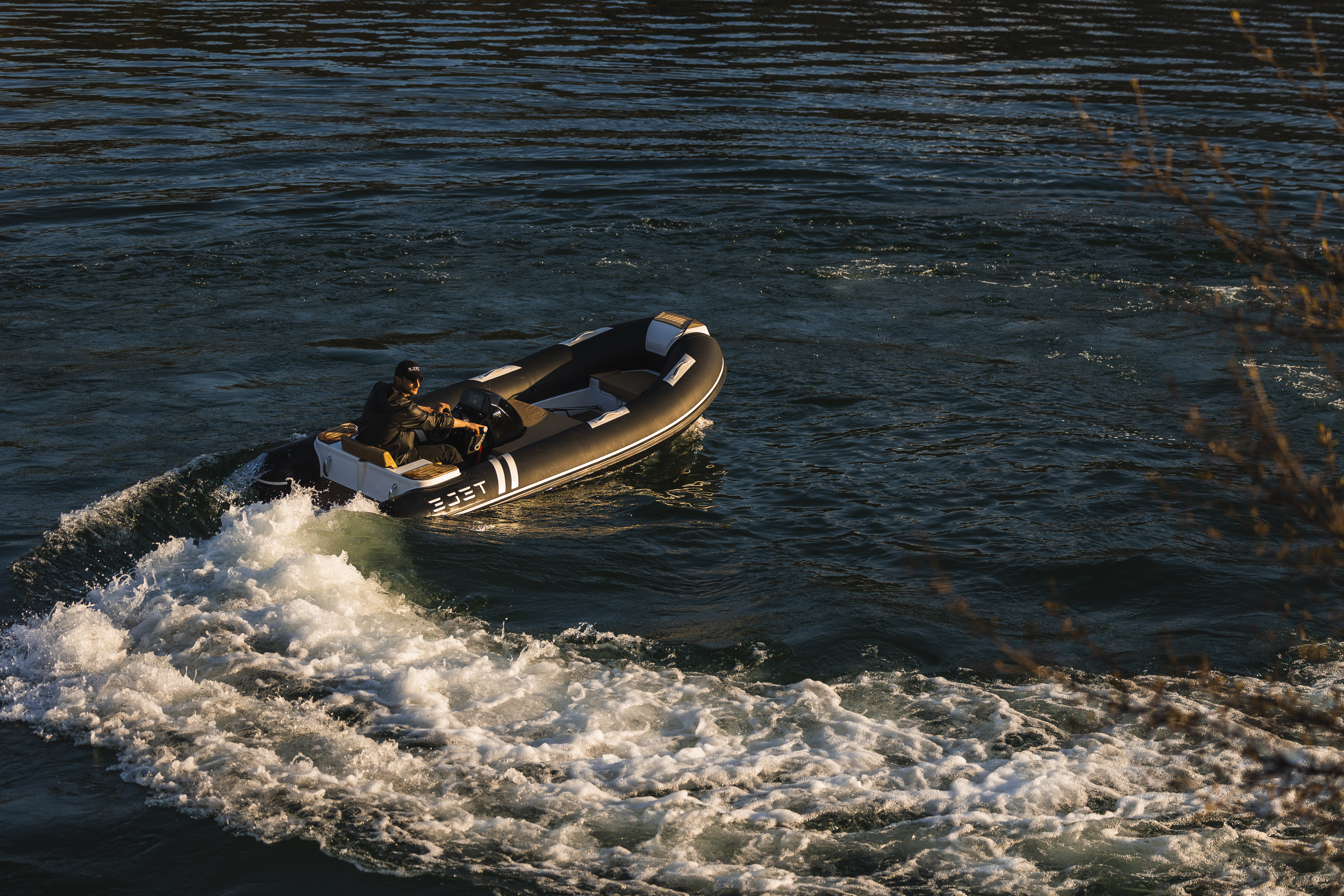
EJET is building the world’s first high-performance electric jet tenders. When they needed a secure, intelligent ignition system that could control who drives, how they drive, and log every session – they brought in us to engineer it from concept to production.

EJET

Engineering the Secure Ignition System for EJET Electric Tenders

From Concept to Production-Ready in Months

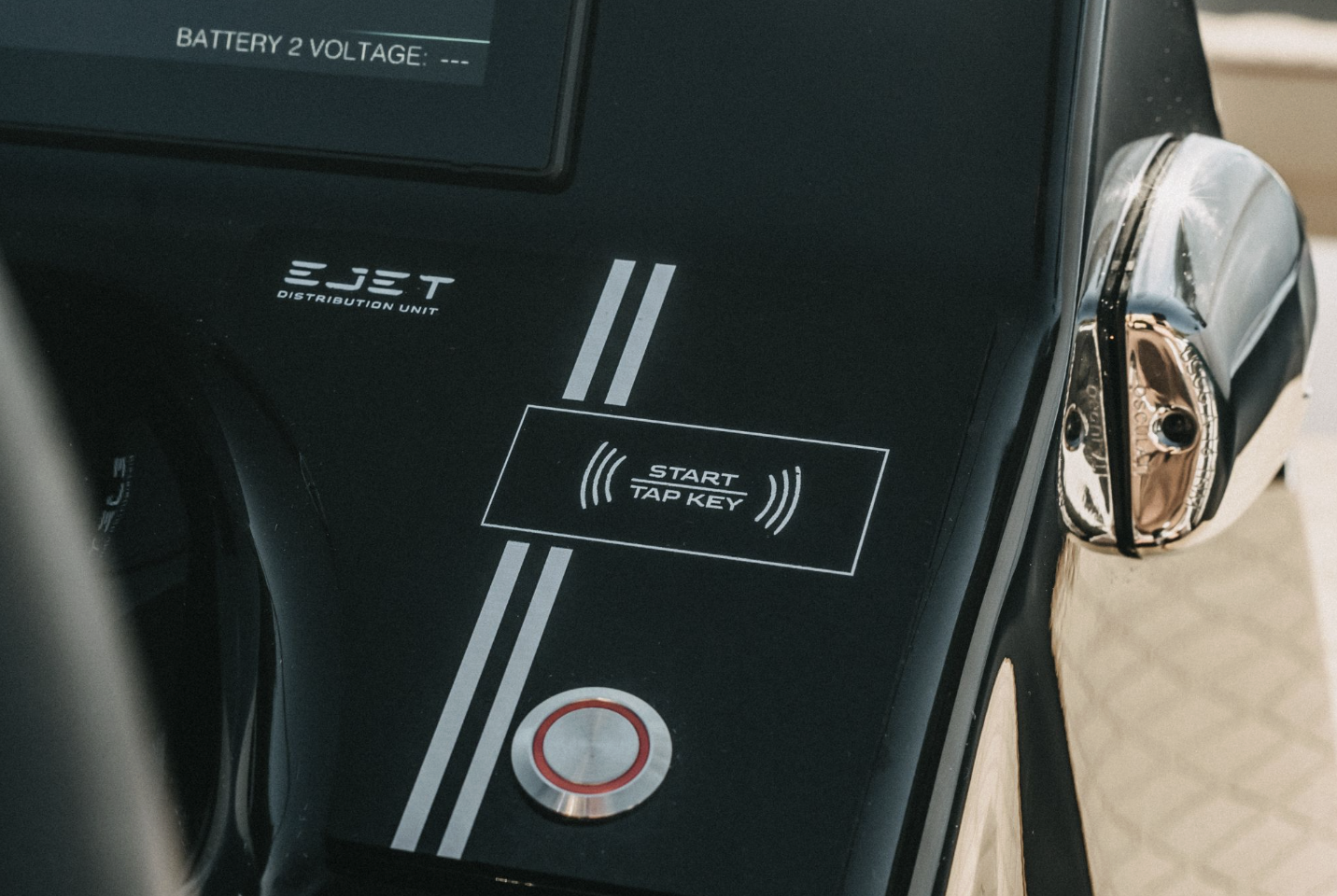
Benchmarked designed and developed EJET’s secure RFID ignition module with programmable SafeDrive technology – a system that turns a simple keyless start into an intelligent access control, safety, and fleet management platform built for the superyacht market.

EJET

Concept → Production-Ready Full Product Development Lifecycle Benchmarked took the SafeDrive ignition module from initial concept through embedded firmware development, hardware integration, security architecture, and production-ready design — in months, not years.

5 Programmable User Profiles Per RFID Card Access Control Each RFID card can be programmed with unique permissions: drive mode restrictions, speed limits, and usage logging — enabling owner, crew, guest, charter, and parental control profiles on a single vessel.

0 Keys. 0 Wires to Hot-Wire. 0 Compromise. Anti-Theft by Design The tender physically cannot start without an authorized RFID card. No mechanical ignition to bypass. No key to copy. Security is embedded at the hardware level.


Why a €100K+ Electric Tender Needed More Than a Key

EJET's 4X tender is a precision machine: 60kW electric jet drive, 46.2 kWh battery, 35 knots top speed, custom hull hydrodynamics, and a 7-inch touch display helm. It starts at approximately €100,000 and is designed for superyacht owners, charter operators, and luxury marinas.

A vessel this valuable, this powerful, and used in this context demanded an ignition and access system far beyond a traditional marine key switch.

The Problem

High Performance Demands Intelligent Control

EJET had a clear vision: a keyless, contactless ignition system that didn't just start the boat - but controlled who could start it, what they could do with it, and recorded everything. Nothing on the market did this for electric marine vessels.

The requirements were exacting:

  • Contactless RFID ignition - no physical key, no mechanical switch. A waterproof, salt-air-resistant system that works reliably in harsh marine environments.
  • Programmable drive mode restrictions per user - an owner's RFID card unlocks full Power mode and all systems. A guest card restricts the tender to Eco mode with speed limiting. A charter operator's card enables Normal mode with usage logging. A parental control card limits speed and drive mode for younger or inexperienced operators.
  • Anti-theft architecture - the tender must be physically inoperable without an authorized RFID card. No bypass. No hot-wiring. No fallback mechanical override that could be exploited.
  • Usage logging per card holder - every ignition event, drive mode selection, and session duration must be recorded and attributed to a specific RFID card, creating a full audit trail for fleet management, charter billing, and insurance documentation.
  • Seamless integration with EJET's existing helm - the module must communicate with EJET's custom 7-inch touch display, battery management system, and electronic control unit without disrupting the existing UX or requiring a redesign of the helm architecture.
  • Production-ready from day one - EJET is scaling from 10 to 30+ units per year. The design must be manufacturable, consistent, and field-serviceable - not a one-off prototype that works in the lab but fails on the water.

EJET needed a team that could think across disciplines: embedded systems engineering, hardware security, RF communication, marine environmental durability, UX integration, and manufacturing readiness. All at once. In months.

The Real Challenge

Engineering at the Intersection of Security, Hardware, and Marine

This wasn't a software project with a hardware wrapper. It was a ground-up embedded systems design operating in one of the most demanding physical environments on earth:

  • Salt water, vibration, UV exposure, temperature extremes - every component must function reliably in conditions that destroy consumer electronics
  • Safety-critical system - a malfunction in the ignition module could strand passengers, create a runaway vessel, or disable safety systems. Failure modes had to be designed for, not just tested against.
  • No off-the-shelf solution existed - marine RFID ignition with programmable user profiles, drive mode control, and usage logging is not a category that exists. This had to be invented.
  • Integration complexity - the module sits between the RFID reader, the battery management system, the electronic control unit, the jet drive, and the touch display. It must speak to all of them reliably, in real time, without latency or conflict.

The Solution

SafeDrive: Secure RFID Ignition with Programmable Intelligence

Benchmarked's engineering team designed and delivered the complete SafeDrive module - from concept through firmware, hardware integration, security architecture, and production-ready design.

1: RFID Hardware Integration

  • Selected and integrated a marine-grade RFID card reader rated for salt air, water spray, vibration, and UV exposure
  • Designed the physical mounting and wiring architecture to fit within EJET's existing throttle lever assembly - maintaining the clean, premium aesthetic that superyacht clients expect
  • Engineered waterproof connector interfaces and strain-relief systems for long-term reliability in marine environments
  • Validated read range, response time, and interference resistance in real-world marine conditions

2: Embedded Firmware Development

  • Developed custom firmware for the SafeDrive microcontroller - handling RFID card authentication, drive mode logic, speed limiting algorithms, and communication with EJET's existing electronic control unit
  • Implemented a real-time state machine governing ignition sequences: card scan → authentication → profile load → drive mode activation → system ready — with fail-safe states at every transition
  • Built the usage logging engine: every ignition event records the card ID, timestamp, drive mode selected, session duration, and system state - stored locally and accessible via the touch display
  • Designed the firmware architecture for field-updateability - enabling EJET to push firmware updates to deployed vessels without hardware swaps

3: Programmable SafeDrive Profiles

  • Engineered a multi-tier access control system mapped to individual RFID cards: Owner Profile — Full access. All drive modes unlocked (Eco, Normal, Power). No speed restrictions. Full system diagnostics and configuration access via touch display. Crew Profile — Normal and Eco modes. Speed cap configurable by owner. Usage logging active. Cannot modify system settings. Guest Profile — Eco mode only. Conservative speed limit. Simplified display interface. All activity logged. Charter Profile — Configurable mode and speed restrictions. Full usage logging for billing and insurance. Session-based access with optional time limits. Parental / Training Profile — Eco mode only. Aggressive speed limiting. Cannot disable safety systems. Designed for inexperienced operators or younger family members.
  • Each profile is programmable via EJET's touch display — owners or fleet managers can assign, modify, or revoke card permissions on the vessel itself, without external tools or software

4: Security Architecture

  • Designed a hardware-level anti-theft system: the tender's electronic control unit will not energize the jet drive without a cryptographically authenticated RFID handshake. There is no mechanical bypass, no fallback key, and no exposed wiring that could be exploited.
  • Implemented encrypted communication between the RFID reader and the microcontroller — preventing card cloning, replay attacks, or signal interception
  • Built tamper detection into the module housing — unauthorized physical access to the module triggers a system lockout and logs the event
  • Designed card revocation capability — a lost or stolen RFID card can be immediately deauthorized from the touch display, with no residual access

5: Touch Display Integration

  • Developed the communication protocol between the SafeDrive module and EJET's 7-inch helm display
  • Designed the on-screen UX for card management: adding new cards, assigning profiles, viewing usage logs, and modifying drive mode restrictions — all accessible through EJET's existing touch interface
  • Integrated real-time status indicators: current operator profile, active drive mode, speed limit status, and session timer — visible at a glance while operating the vessel
  • Ensured zero-latency ignition sequence: from card tap to system ready in under 2 seconds

6: Production-Ready Design

  • Delivered complete manufacturing documentation: BOM (bill of materials), assembly instructions, wiring diagrams, test procedures, and quality control checklists
  • Designed for manufacturability — modular architecture using commercially available components with reliable supply chains, avoiding custom silicon or single-source dependencies
  • Created a standardized test protocol for production line quality assurance — ensuring every unit ships with validated RFID read performance, firmware integrity, and ECU communication
  • Designed the module for field serviceability — replaceable sub-assemblies that EJET's authorized service network can swap without specialized tooling
RFID Reader

"Say goodbye to traditional keys and hello to our brand new throttle lever with an integrated RFID READER. With our EJET wireless key card, you can now unlock your tender effortlessly and enjoy a hassle-free boating experience."

Ziga Jarc, CEO EJET

THE RESULTS

  • Complete SafeDrive ignition module delivered from concept to production-ready design in months - not the 12-18 month timeline typical of marine hardware development
  • 5-tier programmable access control system: Owner, Crew, Guest, Charter, and Parental profiles — each with configurable drive mode restrictions, speed limits, and usage logging
  • Hardware-level anti-theft - the tender is physically inoperable without an authorized RFID card. No mechanical bypass exists.
  • Full usage audit trail - every session logged by card holder, enabling fleet management, charter billing, insurance documentation, and accountability
  • Seamless helm integration - SafeDrive operates through EJET's existing 7-inch touch display with zero additional hardware at the helm
  • Production-ready design with complete manufacturing documentation, test protocols, and supply chain resilience - ready for EJET's scaling production
  • A competitive differentiator - no other electric tender on the market offers programmable, card-based access control with per-user drive mode restrictions. SafeDrive is a feature that sells boats.

Talk to a benchmarked Expert