Unlock this content

To unlock this content please submit the form.

Yes, I want to unlock this content

MasterFI

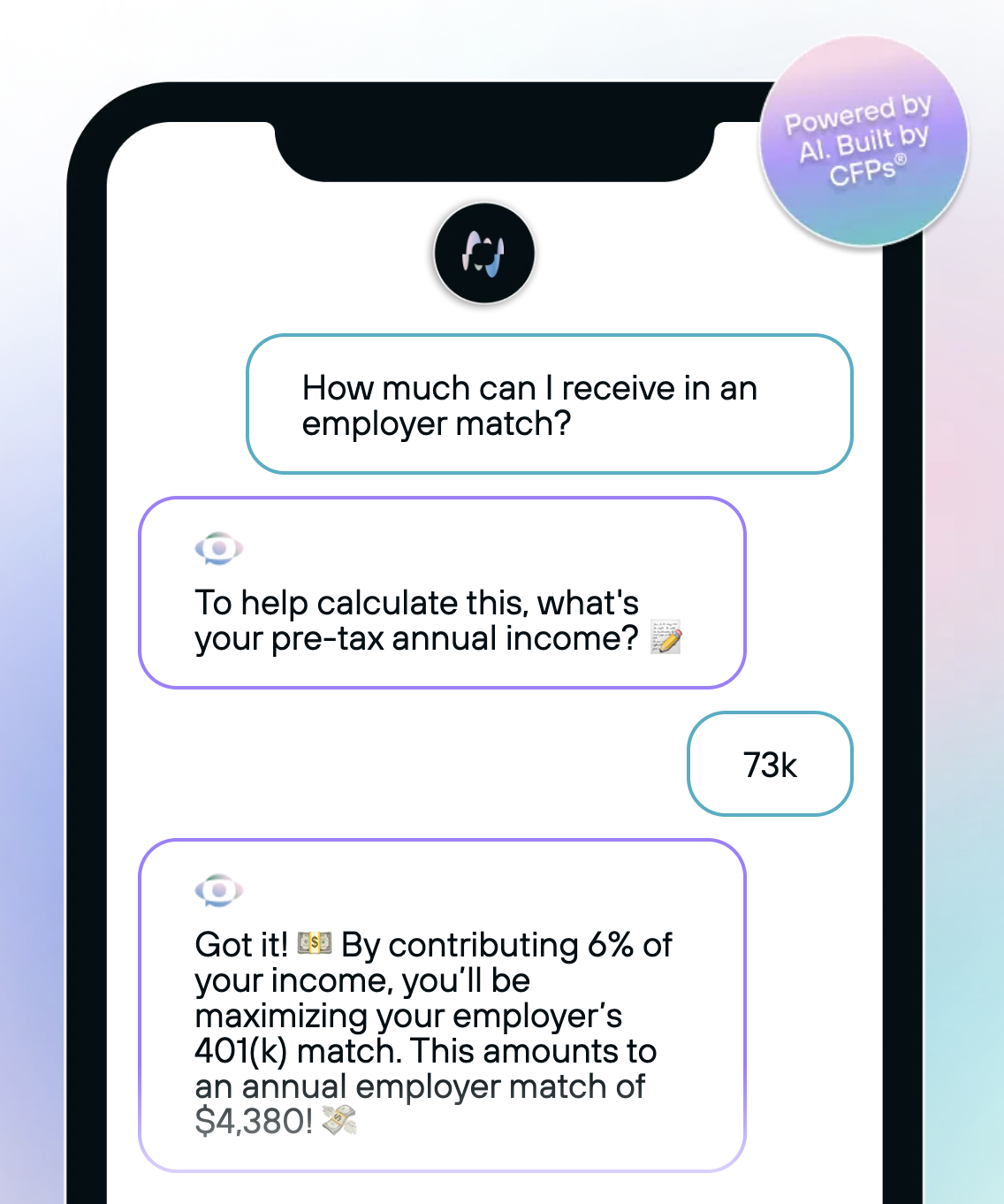
MasterFi is an AI-driven financial wellness platform that helps employees plan for retirement, eliminate debt, and build savings – through conversational AI delivered via iMessage, WhatsApp, and SMS. When you’re processing personal financial data, bank account connections, and 401(k) details through AI models and messaging APIs, security architecture isn’t optional. It’s existential.

Securing AI-Powered Financial Conversations at MasterFi

Fractional CTO. DevSecOps. Cloud Migration. One Engagement.

Benchmarked provides ongoing security advisory, cloud architecture, and fractional CTO services to MasterFi – ensuring that an AI platform handling sensitive financial data is built on infrastructure that’s secure, scalable, compliant, and cost-efficient from day one.

MasterFI

Why an AI Fintech Platform Is a Uniquely High-Risk Environment

MasterFi isn't a chatbot. It's a financial advisory system that ingests deeply personal data - income, debt balances, 401(k) contributions, credit card APRs, retirement projections, employer benefit structures - and processes it through AI models to deliver personalized financial guidance via consumer messaging platforms.

That architecture creates a threat surface most startups don't understand until it's too late.


Key KPIs:

Fly.io → AWS Infrastructure Migration Benchmarked is architecting and executing MasterFi's migration from Fly.io to AWS - delivering enterprise-grade infrastructure with proper environment separation, access governance, PII isolation, and a baseline architecture for SOC 2 Type 1 certification.

4–6 Days Migration Estimate The full migration scope - AWS setup, component deployment, environment separation, access governance, PII database isolation, and team onboarding - scoped and estimated at 4–6 man-days. Speed without shortcuts.

SOC 2 Baseline Built Into the Architecture Every infrastructure decision - from database segmentation to access controls to encryption policy - is designed with SOC 2 Type 1 requirements in mind. Compliance isn't a retrofit. It's the foundation.


The Real Risk

Financial Data + AI + Messaging = Compound Exposure

The combination of financial data sensitivity, AI model behavior, and third-party messaging APIs creates a risk profile that's greater than the sum of its parts:

  • Regulatory exposure - MasterFi handles data governed by SOC 2, GLBA (Gramm-Leach-Bliley Act), state financial privacy laws, and potentially CCPA/GDPR depending on user geography. A data breach involving financial records triggers mandatory disclosure and potential regulatory action.
  • Plaid as a high-value attack vector - Plaid tokens provide access to users' live bank accounts. If compromised, an attacker doesn't just get data - they get a real-time window into a user's financial life. Token storage, rotation, and revocation must be architected for zero-trust.
  • AI model data leakage - Large language models and agent frameworks like LangGraph maintain conversation context. Without proper session isolation and data handling, one user's financial details could theoretically surface in another user's conversation - a catastrophic privacy failure.
  • Messaging API surface area - CM.com routes conversations across iMessage, WhatsApp, and SMS. Each channel has different security characteristics, data retention policies, and compliance implications. The integration must handle all of them securely.
  • Startup-to-enterprise transition risk - MasterFi sells to employers as a benefit. Enterprise buyers perform vendor security assessments. A single failed assessment doesn't just lose one deal - it signals to the market that the platform isn't enterprise-ready.

The Problem

Moving Fast With Financial Data and AI Models

MasterFi's product works. Users message the AI through iMessage, WhatsApp, or SMS via CM.com. The AI (powered by LangGraph and FastAPI) processes the conversation, retrieves financial data, runs calculations, and responds with personalized advice. It connects to financial institutions through Plaid for real-time account data. It stores conversation history, financial profiles, and behavioral data in PostgreSQL. It uses Redis for message queuing and scheduled follow-ups.

The product was live. Users loved it. But the infrastructure had grown organically around speed-to-market - not security, scalability, or compliance:

  • Hosted on Fly.io - a platform designed for developer speed, not enterprise security posture. No native support for the environment separation, access governance, audit logging, or PII isolation required for financial data handling.
  • No environment separation. Development, testing, and production ran without clear boundaries - meaning a developer debugging a feature could inadvertently access real user financial data.
  • No PII database isolation. Personal financial information - income, account balances, debt details, Social Security numbers - sat alongside application data with no segmentation, encryption-at-rest policy, or access controls proportional to the sensitivity of the data.
  • No access governance. Who could access what, when, and why wasn't documented, controlled, or auditable - a non-starter for SOC 2, and a material risk for a platform handling financial data.
  • AI model security unaddressed. LangGraph conversations process and retain sensitive financial context. Without proper guardrails, AI models could inadvertently leak PII across sessions, log sensitive data in plaintext, or expose financial details through API responses.
  • Plaid integration security posture undefined. Plaid provides real-time access to users' bank accounts, transaction history, and balances. The security architecture around this integration - token storage, access scoping, data retention policy, and breach response - had not been formally assessed.
  • No path to SOC 2. Enterprise employers - MasterFi's target customers - require SOC 2 Type 1 as a minimum for any vendor handling employee financial data. The current infrastructure couldn't pass an audit.
  • Cloud costs unoptimized. As usage grew, infrastructure costs were scaling linearly with users rather than efficiently - a common pattern when architecture decisions are made for speed rather than cost-awareness.

MasterFi needed more than a cloud engineer. They needed a security-minded technical leader who could rearchitect the infrastructure, migrate to an enterprise-grade platform, and establish the DevSecOps practices that would carry them from startup to enterprise sales - without slowing down product development.

The Solution

Security-First Architecture, Fractional CTO Services, and Cloud Migration

Benchmarked embedded with MasterFi as a fractional CTO and DevSecOps partner - providing ongoing security architecture, cloud infrastructure leadership, and the technical strategy that bridges product velocity with enterprise-grade security.

Cloud Architecture & AWS Migration

  • Designed the target-state AWS architecture: API Gateway for request routing and authentication, Lambda for event-driven CM.com communication triggers, EventBridge for message scheduling, ElastiCache (Redis) for caching, and RDS (PostgreSQL) for persistent storage
  • Architecting the migration from Fly.io to AWS with zero-downtime transition planning - moving the Nodestar service, FastAPI, LangGraph, and all supporting infrastructure to a properly governed AWS environment
  • Established environment separation: distinct dev, test, and production environments with isolated networking, credentials, and data - ensuring developers never touch production financial data
  • Designed manual deployment configuration with a clear path to infrastructure-as-code when the team is ready to scale further

PII Isolation & Data Security

  • Designed database architecture with PII isolation - personal financial data (income, balances, SSN, account details) segmented from application data with separate access controls, encryption policies, and audit trails
  • Implemented encryption at rest and in transit for all financial data stores - meeting the baseline requirements for SOC 2 and GLBA compliance
  • Established data classification taxonomy: what constitutes PII, what constitutes sensitive financial data, what can be logged, and what must be redacted - creating clear rules for every system component
  • Designed retention and deletion policies aligned with regulatory requirements and user consent

AI Security & LLM Guardrails

  • Assessed LangGraph conversation handling for PII exposure risks - ensuring financial context doesn't leak across user sessions, persist in logs, or surface in API responses
  • Advised on prompt architecture to prevent financial data from being embedded in model context windows beyond the active session
  • Established logging policies for AI interactions: conversation metadata logged for analytics and debugging, but financial specifics redacted from all persistent logs
  • Designed the security boundary between the AI layer and the financial data layer - ensuring the LLM can access what it needs to provide advice without becoming a repository of sensitive financial records

Plaid Integration Security Advisory

  • Assessed the security posture around Plaid's financial data access - covering token storage, access scoping, refresh handling, and revocation procedures
  • Advised on minimizing data exposure: requesting only the Plaid data products needed for MasterFi's functionality, rather than broad access that increases risk surface
  • Established monitoring for anomalous Plaid API usage - detecting patterns that could indicate compromised tokens or unauthorized access attempts
  • Designed the data flow architecture: financial data from Plaid flows through defined, auditable pathways with encryption at every transit point - never stored in plaintext, never logged in full

SOC 2 Baseline Architecture

  • Every infrastructure decision - from environment separation to access governance to PII isolation - is designed with SOC 2 Type 1 requirements as the baseline
  • Established access control governance: role-based access, individual credentials (no shared accounts), audit logging of all privileged actions, and documented access review procedures
  • Designed the evidence collection architecture: the systems themselves generate the audit trail that SOC 2 auditors require - access logs, change management records, encryption validation, and incident response documentation
  • Created a clear roadmap from current state to SOC 2 Type 1 readiness - identifying gaps, sequencing remediations, and establishing the policies and procedures that will survive an audit

Cost Optimization & Cloud Efficiency

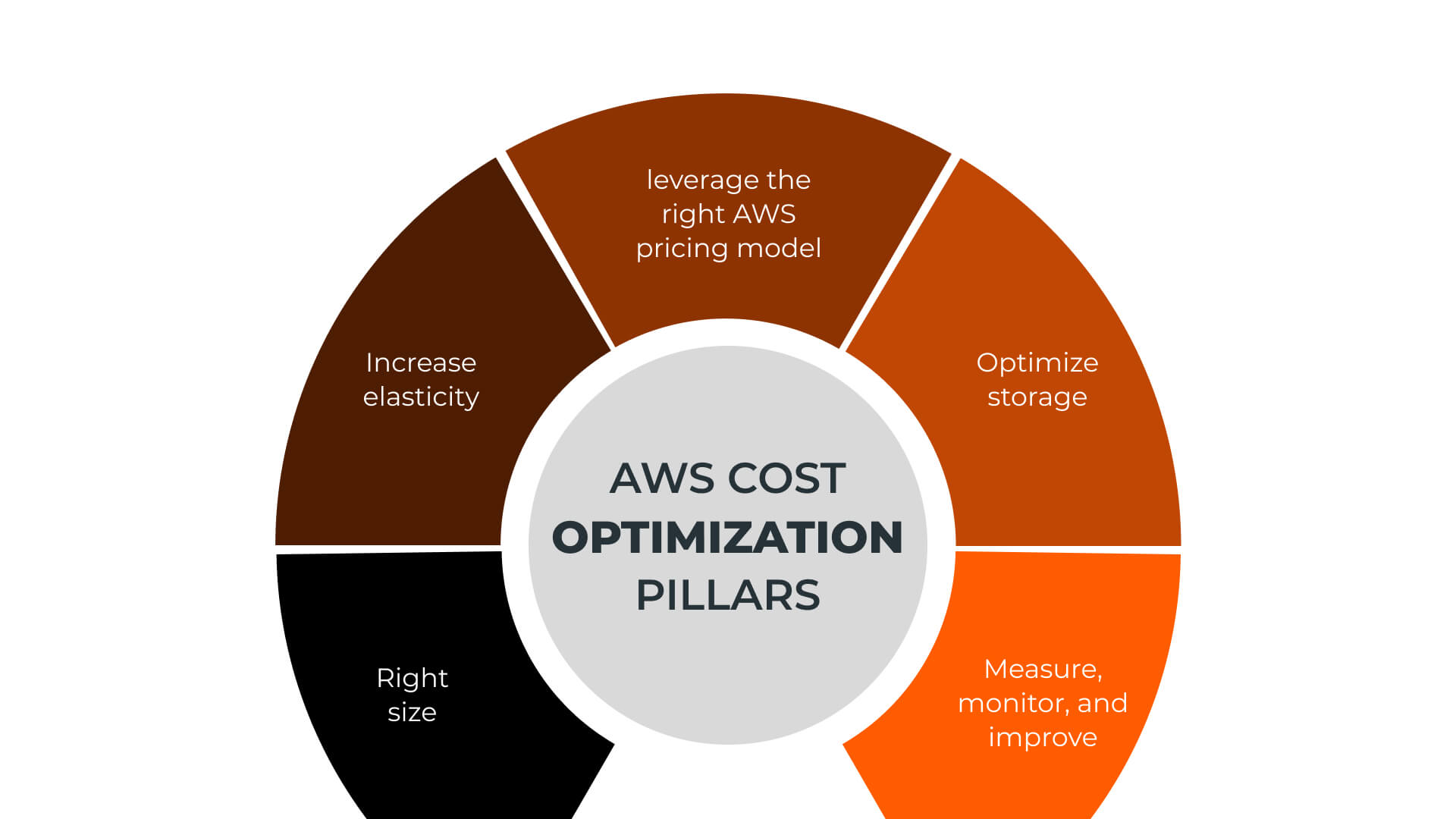
  • Analyzed current infrastructure spend and identified optimization opportunities in the migration to AWS
  • Designed the AWS architecture for cost efficiency: Lambda for event-driven workloads (pay-per-invocation, not per-server), right-sized RDS instances, and Redis caching to reduce database load
  • Established cost monitoring and alerting - ensuring MasterFi's cloud spend scales sub-linearly with user growth rather than proportionally
  • Provided ongoing advisory on build-vs-buy decisions, service selection, and architecture choices that balance capability with cost
Pillars_of_AWS_Cloud
  • AWS migration architected and in progress - transitioning from Fly.io to an enterprise-grade AWS infrastructure designed for financial data security, SOC 2 compliance, and scalable growth
  • PII isolation implemented - personal financial data segmented with dedicated access controls, encryption, and audit trails
  • Environment separation established - dev, test, and production environments fully isolated, eliminating the risk of developer access to real financial data
  • AI security guardrails in place - LangGraph conversation handling assessed and secured against PII leakage, cross-session contamination, and logging exposure

THE RESULTS

  • Plaid integration security hardened - token handling, access scoping, and data flow architecture designed for zero-trust financial data access
  • SOC 2 Type 1 baseline architecture - every infrastructure component designed with audit readiness built in, creating a clear and achievable path to certification
  • Cloud cost optimization - AWS architecture designed for sub-linear cost scaling with event-driven compute, right-sized databases, and efficient caching
  • Internal team onboarded - MasterFi's development team trained on the new architecture, security practices, and operational procedures
  • Ongoing fractional CTO services - Benchmarked continues to provide security advisory, architecture decisions, and technical leadership as MasterFi scales toward enterprise sales

Talk to a benchmarked Expert

false